skip to main | skip to sidebar

Cosmobile Cosmopolitan Transport

For the People; Not just the Aristocrats who want to get others to stop driving

Showing posts with label Goofy Anti Freeway Dogma. Show all posts

Tuesday, January 16, 2024

Doctrinaire Anti Roads "Smart Towns" Connection with Wall Street & Catholic Church

 "Strong Towns" is a 501(3) non profit, headquartered in Brainerd, Minnesota


Strong Towns is an American non-profit organization dedicated to helping cities and towns in the United States achieve financial resiliency through civic engagement.[1][2] The advocacy group points to American post-World War II suburban development as a failure and seeks to improve communities through urban planning concepts such as walkability, mixed-use zoning, and infill development.[3] Strong Towns seeks to end American parking mandates[4] and highway expansion[1] and to reduce the country's car dependency.[1]

The organization was founded by Charles Marohn,[1] a former professional engineer, and is headquartered in Brainerd, Minnesota.[4]

https://en.wikipedia.org/wiki/Strong_Towns


 About "Smart Towns" listed founder Charles Marohn:


Charles Marohn (born c. 1973) is an American author, land-use planner, municipal engineer, and the founder and president of Strong Towns, an organization which advocates for the development of dense towns and the restructuring of suburbia.[1][2][3][4][5]

Early life and education

Charles L. Marohn Jr grew up in Baxter, Minnesota on a small farm.[6][7]


He graduated from Brainerd High School in 1991. Marohn received a Bachelor of Science in Civil Engineering and a Masters in Urban and Regional Planning from the University of Minnesota.[1] In 2000 he became a licensed professional engineer (PE) in the state of Minnesota.


He has since[when?] faced scrutiny by the state licensing board after an engineer from South Dakota reported Marohn for failing to renew his license in the mandated time frame, yet still calling himself a PE. Marohn admits to missing the license renewal deadline but acted quickly upon being made aware of the situation and addressed the oversight. Marohn viewed this action as a limitation upon his first amendment rights because of his critical statements made about the practices of traffic engineering, as well as his disapproval of civil engineers who he views as doing little to protect human life on roads.[8][needs update]


Strong Towns

Main article: Strong Towns
 
Marohn giving a lecture about Strong Towns in Seattle in 2016
 

Marohn started Strong Towns as a blog in 2008.[6] He was frustrated with projects he was working on which he believed were actively harming the places they were supposed to help.[6][2] As he gained many readers, he realized there was a need for an organization that advocated the principles he espoused. Strong Towns became a non-profit organization to "support a model of growth that allows America’s towns to become financially strong and resilient".[9]


Marohn believes that post World War II suburban development has been a failure, due to it being inherently economically unsustainable. He posits that low-density communities do not produce the tax revenue necessary to cover either their current services or the long-term costs of maintaining and replacing their services, and that suburbs are very difficult to adapt to an efficient, dense model because they were built as fully developed places.[7]


In 2011, he coined the word "stroad," a street/road hybrid, which has become popular among urbanists and planners.[10][11] According to Marohn, stroads are the "futon" of transportation alternatives. "Where a futon is an uncomfortable couch that also serves as an uncomfortable bed, a STROAD is an auto corridor that does not move cars efficiently while simultaneously providing little in the way of value capture."[7]


In late 2015, Marohn participated in a White House conference on rural placemaking.[7]

https://en.wikipedia.org/wiki/Charles_Marohn


Whatever good ideas Smart Towns may well have, is alas undermined by their lack of credibility with regards to its dogmatic opposition to any major road infrastructure expansion whatsoever.  They reflexively hate roads without stop signs or traffic lights, opposing any expansion of those existing, the creation of new ones, and are disappointing weak on offering mitigation.


No New Roads

We understand the problem of highway expansion. We have seen its impact firsthand in cities and towns across North America. That is why Strong Towns has been advocating to end highway expansion for over a decade.

https://www.strongtowns.org/highways 


No new roads, and no expansion of existing roads, especially expressways/freeways constructed during the 1950s.  Gets its facts wrong, overstating harms while ignoring benefits as well as creative design solutions that would address legitimate concerns of urban livability, including disregarding environmental and safety concerns.


Who and what is behind "Smart Towns"?


Accordingly:


Our 2023 Supporters

Strong Towns is supported by an incredible number of people. Since the organization’s founding in 2008, its supporters have built a remarkable movement. Whether your support is through membership, hosting an event, partnering or sponsoring a project, foundational support, or anything else, we thank you. 


In addition to our members and other supporters, we acknowledge the following as major contributors to the Strong Towns movement. Thousands of people across North America are working to make their cities safe, livable, and financially resilient. These supporting organizations have taken major steps to ensure that everyone has an opportunity to live a good life in a prospering place.

https://www.strongtowns.org/supporters


This above url lists three entities:


Blandin Foundation

Driehaus Foundation

Urban 3


Of these, the most apparent tie in with wall street and the notoriously anti road Jesuit Order is Driehaus Foundation founder Richard Herman Driehaus.  Some excerpts from wikipedia:


https://en.wikipedia.org/wiki/Richard_Driehaus#

Richard Herman Driehaus (/ˈdriːhaʊs/; July 28, 1942 – March 9, 2021)[1][2] was an American fund manager, businessman and philanthropist. He was the founder, chief investment officer, and chairman of Driehaus Capital Management LLC, based in Chicago. 


The philanthropic activities of the Richard H. Driehaus Foundation and the Charitable Trust are widely acknowledged in the fields of culture, arts, heritage protection, journalism and architecture, including the renowned global Driehaus Architecture Prize for new classical architecture. 


In 2000, he was named in Barron's "All-Century" team of the 25 individuals who have been the most influential within the mutual fund industry over the past 100 years.[3] His firm had $13.2 billion in assets under management as of March 2021....


He is often credited as the father of momentum investing, as he popularized the strategy which calls for spotting stocks on prolonged upward trends.[4][5] This strategy reportedly delivered compound annual returns of 30% for Driehaus Capital Management in the 12 years after it was set up in the 1980s.[6


Driehaus was born in Chicago. He attended high school at St. Ignatius College Prep and received his undergraduate (1965) and master's (1970) degrees in business from DePaul University. He also received an honorary doctorate degree from DePaul in 2002.[7][8][9]


From 1968 through 1973, Driehaus developed research ideas for the institutional trading department at A.G. Becker & Co. In 1973, he became director of research for Mullaney, Wells & Co. In 1976, he became director of research and a money manager for Jesup & Lamont.[10] In 1979, he set up Driehaus Securities, a research broker that provided ideas to a select group of accounts, followed by Driehaus Securities LLC in 1980.[9][10]


He founded Driehaus Capital Management LLC in 1982 and until his death was the current chief investment officer and chairman.[9][10] He later founded Driehaus Mutual Funds in 1996, and Driehaus Capital Management (USVI) LLC in 1997.[9][11]


Driehaus explained that "the momentum investor has confidence that a stock that is high can head even higher. We rarely invest in stock because it's cheap and hope for a turnaround."[12]...


Awards


Driehaus was inducted as a laureate of The Lincoln Academy of Illinois and awarded the Order of Lincoln (the State’s highest honor) by the Governor of Illinois in 2017.[25]


Philanthropy


Driehaus has given widely both individually and through the Richard H. Driehaus Foundation and the Richard H. Driehaus Charitable Trust.[9] He contributed an equivalent of $92 million in 2000's dollars from 1984 until 1987 already;[26] and his foundations kept donating ever since.


Driehaus often pointed to his Roman Catholic roots as a guide to his philanthropic endeavors. Driehaus said, “You have to continue to learn your whole life, you have to be responsible for your own actions, and you have to give something back to society.”[27]


 He has said that his original plan was to give away only $100 million during his lifetime, but believed that he will end up parting with more than twice that amount.[28][29]


Driehaus Architecture Prize


The Richard H. Driehaus Prize for Classical Architecture (short: Driehaus Architecture Prize) was established in 2003 and doubled to $200,000 in 2008. It is presented annually through the University of Notre Dame School of Architecture to honor a major contributor in the field of traditional and New Classical architecture.[9][30]


In his 2012 interview with architect and urbanist Michael Lykoudis, Driehaus gives his inspiration for establishing the prize: "I believe architecture should be of human scale, representational form, and individual expression that reflects a community's architectural heritage. There is a delight, proportion, and harmony in classical architecture that I wasn’t finding in the contemporary buildings coming up around me in Chicago."[31] The Driehaus Prize is often compared to the Pritzker Architecture Prize, which typically encourages modern design.[7][32]


“The prize [...] represents a partial counterbalance to the rejection of classical forms by elite architecture that prevailed for much of the last century,” notes James Panero, an American culture critic.[7] The Driehaus Prize is typically awarded around the same time, has similar terms, are both commemorated by a bronze award (the Pritzker is a medal and the Driehaus is a miniature Choragic Monument of Lysicrates), and, until 2008, both were the same monetary prize amount.[33]


The first recipient of the Driehaus Prize was Léon Krier, who helped lay the theoretical framework for New Urbanism and designed the Prince of Wales' model town of Poundbury in England.[7][33] The first American to win the prize was Allan Greenberg in 2006, who redesigned the interior of more than 30 rooms of the U.S. Department of State.[32] The award has been given to architects associated with postmodernism, such as Michael Graves (2012) and David M. Schwarz (2015).[citation needed]

...
See also
  • Richard H. Driehaus Museum
  • Momentum investing
  • New Classical architecture
  • Richard H. Driehaus Prize for Classical Architecture

References

  • Lee, Ella (March 10, 2021). "Richard Driehaus, DePaul alum and business school namesake, dies at 78". The DePaulia. Retrieved March 10, 2021.

  • Reeder, David (March 11, 2021). "A legend as an investor and donor, Richard Driehaus dies at 78". Chicago Sun Times. Retrieved March 11, 2021.

  • Krishnamsetty, Meena. "Richard Driehaus’ Long-Term Stock Picks", Insider Monkey, October 19, 2011; retrieved September 21, 2015.

  • Beattie, Andrew. "Riding The Momentum Investing Wave", forbes.com, July 25, 2007; retrieved September 4, 2017.

  • Marek, Lynne. "Richard Driehaus launches private-equity fund." Crain's Chicago Business, May 13, 2015; retrieved September 21, 2015.

  • Hobson, Ben. "How Richard Driehaus made a fortune by finding tomorrow's growth stars." Stockopedia.com via Interactive Investor, November 4, 2015; retrieved September 21, 2015.

  • "From Driehaus to Our House". Philanthropy Fall, 2012. Panero, James. Retrieved December 20, 2014.

  • Di Mento, Maria "No. 38: Richard Driehaus". The Chronicle of Philanthropy. February 10, 2013. Retrieved September 19, 2015.

  • Dietlin, Lisa M. "Richard Driehaus", Transformational Philanthropy: Entrepreneurs and Nonprofits. Jones & Bartlett, 2010, pp. 174-82; ISBN 0-7637-6678X. Select pages archived through Google Books, books.google.com; accessed September 4, 2017.

  • Ryval, Michael (October 2008). "A veteran's investment philosophy". Advisor's Edge. October 1, 2008. Retrieved March 18, 2021.

  • Malony, Tom. "The Greater Gloy Campaign: Richard Driehaus ’60 meets the campaign head on", St. Ignatius Magazine, February 2005; retrieved September 21, 2015.

  • Murphy, H. Lee. "Driehaus: If it's rising, jump aboard", Crain's Chicago Business, November 20, 2004; retrieved September 22, 2015.

  • Driehaus Museum - WSJ obituary. "Driehaus Museum - WSJ obituary" (PDF).

  • "About". American Friends of the Czech Republic. Retrieved January 17, 2023.

  • "VESTED INTERESTS". Chicago Tribune. Retrieved January 17, 2023.

  • Roberts, Sam (March 20, 2021). "Richard H. Driehaus, Champion of Classic Architecture, Dies at 78". The New York Times. ISSN 0362-4331. Retrieved January 14, 2023.

  • "A Classic Act". Chicago Magazine. Retrieved January 17, 2023.

  • "Inese and Richard Driehaus - Friends of the University of Latvia". Retrieved January 17, 2023.

  • "Richard Driehaus plans a summer wedding on top of regular bash". Crain's Chicago Business. July 16, 2010. Retrieved January 17, 2023.

  • "Gold Coast mansion associated with Driehaus is sold at a huge loss". October 3, 2022. Retrieved January 17, 2023.

  • Garmes, Kyle. "Driehaus, 78, renowned financier, philanthropist". The Beverly Review. Retrieved January 17, 2023.

  • "Richard H. Driehaus Obituary - Visitation & Funeral Information". www.schmaedekefuneralhome.com. Retrieved January 14, 2023.

  • "A legend as an investor and donor, Richard Driehaus dies at 78". Chicago Sun-Times. March 11, 2021. Retrieved January 14, 2023.

  • "Driehaus Museum - NYT obituary" (PDF).

  • "A Legacy That's Larger Than Life". Driehaus Capital Management. Retrieved March 18, 2021.

  • Marchetti, Domenica (November 2, 2000). "A Grand Design for Giving". The Chronicle of Philanthropy. Retrieved March 18, 2021.

  • Barnas, Joseph Paul (March 19, 2021). "In Memoriam: Richard Driehaus". The American Conservative. Retrieved January 14, 2023.

  • Marchetti, Domenica (2000). "A grand design for giving." Chronicle of Philanthropy 13. Retrieved from Highbeam Business Septmenber 2015: [1]

  • Bertagnoli, Lisa. "When giving crosses faith lines." Crain's Chicago Business, May 19, 2012; retrieved September 21, 2015.

  • Sharoff, Robert. "Modernist Chicago's Voice of Dissent", New York Times, January 17, 2008; retrieved October 10, 2015.

  • Lykoudis, Michael. "ICAA Interview with Richard Driehaus." The Forum: The Newsletter of the Institute of Classical Architecture & Art. Spring/Summer 2012; retrieved September 21, 2015.

  • Kamin, Blair. "Classical act Greenberg becomes first American to claim Driehaus Prize." Chicago Tribune, January 20, 2006; retrieved September 22, 2015.

  • Kamin, Blair. "Architecture prize honors tradition", Chicago Tribune, March 7, 2003; retrieved September 22, 2015.

  • Massie, Caroline. "Philanthropist Richard Driehaus Will Receive the 2015 AIA Chicago Lifetime Achievement Award", The Journal of the American Institute of Architects, August 6, 2015; retrieved September 22, 2015.

  • Kamin, Blair. "Driehaus and Krier do battle against Gehry's Eisenhower Memorial design". Chicago Tribune. Retrieved February 19, 2012.

  • Bernstein, Fred A. "Newsmaker: Richard Driehaus", Architectural Record, March 19, 2015; retrieved September 22, 2015.

  • "Richard H. Driehaus commits $1 million to Landmarks Illinois", landmarks.org; accessed September 4, 2017.

  • Sharoff, Robert. "A Classic Act", Chicago Magazine, September 27, 2007; retrieved September 21, 2015.

  • Seminara, Dave. The Richard H. Driehaus Museum: Chicago's Downton Abbey, Gadling.com, March 12, 2013; retrieved September 21, 2019.

  • Mitchum, Robert. "Restored mansion to reopen as museum." Chicago Tribune, May 15, 2008; retrieved September 21, 2015.

  • Cosgrove, Suzanne. "Recognition of 22 jobs well done", Chicago Tribune, September 7, 2008; retrieved September 21, 2015.

  • Lopez, Ruth (March 11, 2021). "Richard Driehaus, Chicago philanthropist and architecture patron, dies at 78". The Art Newspaper. Retrieved March 18, 2021.

  • Yerak, Becky. "Chicago investment manager donating $30 million to DePaul University's business school", Chicago Tribune, February 15, 2012; retrieved September 21, 2015.

  • Driehaus College of Business Quick Facts, DePaul University website; retrieved September 22, 2015.

  • "Lisa Nigro" Archived copy, mylifetime.com; retrieved September 22, 2015.

  • Klein, Peter and Angelica Berrie. A Passion for Giving: Tools and Inspiration for Creating a Charitable Foundation. Hoboken, New Jersey: John Wiley & Sons, Inc. (2012); ISBN 1118023870

    1. Calacci, Carol. "The 14th Annual Driehaus Awards for Fashion Excellence Supports Emerging Chicago Designers", Second City Style, May 6, 2015; retrieved September 21, 2015.

    Further Links

    • Schwager, Jack D. "Richard Driehaus: The Art of Bottom-Up Investing." The New Market Wizards: Conversations with America's Top Traders. New York: HarperBusiness, 1994. 211-229. ISBN 0-88730-667-5
    • Driehaus Foundation
    • Driehaus Capital Management
    • Driehaus Design Initiative
    • Driehaus Prize


    Posted by Douglas Andrew Willinger at 12:33 AM No comments:
    Labels: "Strong Towns", Goofy Anti Freeway Dogma

    Friday, November 3, 2023

    Buffalo, N.Y. Expressway Tunnel/Humboldt Parkway Subjected to Disinformation & Distraction Campaign

    See my 2010 article on this project:


    https://cos-mobile.blogspot.com/2010/09/cap-buffalo-nys-kensington-expressway.html


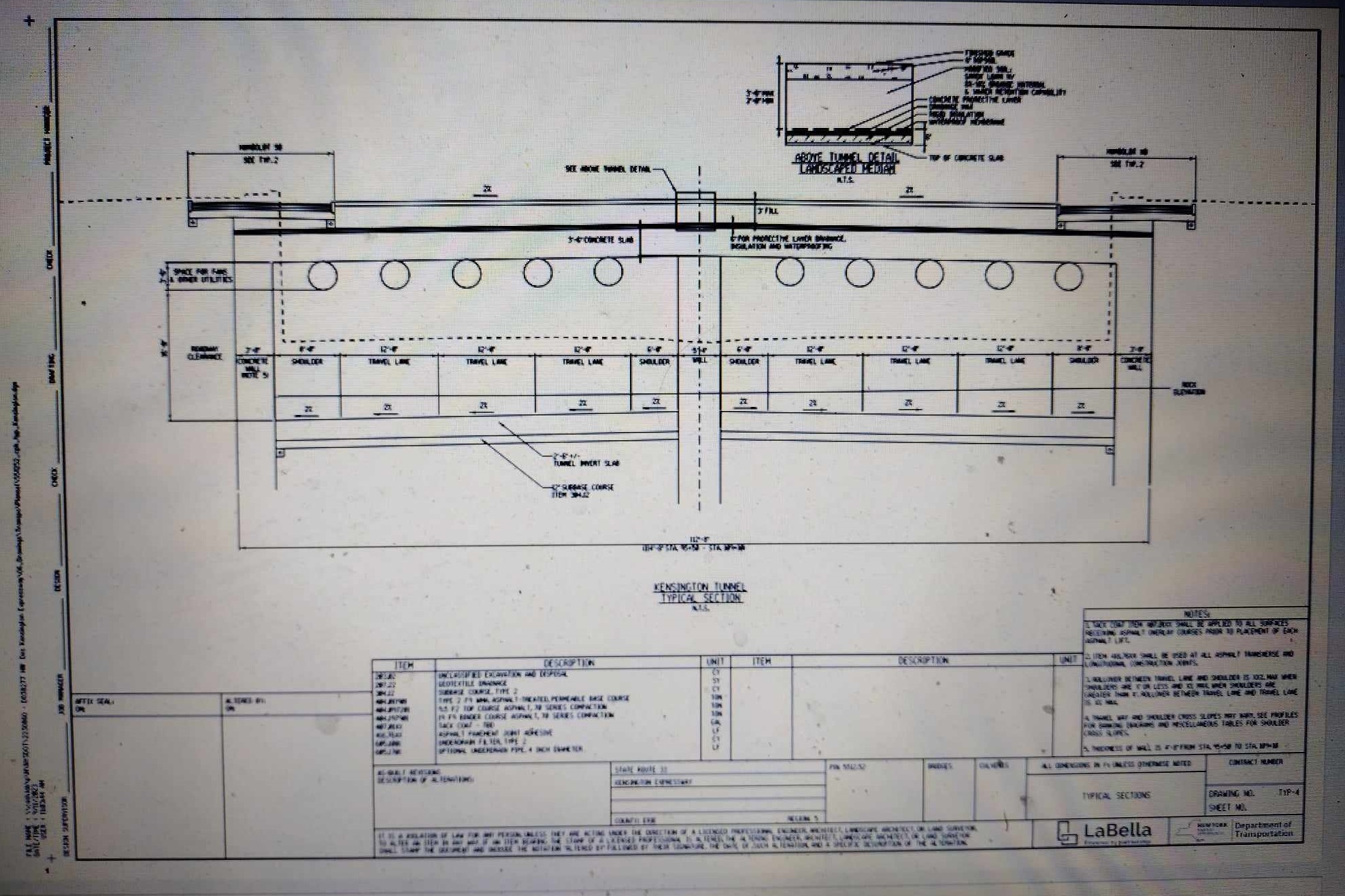
    The current N.Y.S. Kensington Expressway Tunnel project represents the only sensible alternative configuration, of converting the existing trench expressway into a complete corridor tunnel, with a small extension northward (due to the high excavation requirements of removing rock).  


    And it should at the very least be practical as an initial stage for restoring Humboldt Parkway to Delaware Park, with some revisions: perhaps lower it another 10-18 inches for more substantial tree root area, and most certainly extend the project's excavation northward by at least 350 feet, to facilitate a subsequent project to extend the expressway tunnel & restored Humboldt Parkway to Delavan Avenue, and continue the Humboldt Parkway restoration to Delaware Park/Agassiz Circle atop a likewise buried 198 tunnel.


    Nonetheless, it has come under attack of large numbers of comments favoring the absurd idea of filling in the existing Kensington Expressway open trench.  That is, to instead place the vehicular traffic upon the surface, necessitating wider roadways and a drastically narrowed green-way median, let alone the significantly steeper ascent grade, for northbound traffic by the Science Museum.


    Those that chant "fill it in" claim they seek to restore Humboldt Parkway.  But with 70-80K vehicles daily, they conveniently ignore that the project remains connected to expressways at both ends, and that the original Humboldt Parkway lacked connecting expressways.  They say they want clean air.  Yet somehow repurposing a 65 mph expressway segment as a 30 mph boulevard, with a considerably loader, more polluting northbound climb past the Science Museum owing to a ridiculous edict to destroy urban expressways.


    A perusal of the NYSDOT comments received, and of newspaper articles indicates many have so accepted dogma over rationality in favoring a step backwards by filling in the trench for creating an 8 to 10 lane (or perhaps a 6 lane) surface arterial with a considerably narrower attempted recreation of Humboldt Parkway.


    Comparably little attention has been given to the planning feasibility.  


    Obviously, we don't [yet] have a project extending the tunnel under a linear park to Agassiz Circle because of the costs- am guessing perhaps $4 1/2 billion rather than $0.9 billion, owing to the sheer amount of required excavation.  Alas the 198 connection only has a brief trench passing under only two street crossings, with the rest surface level.


    But what about the feasibility of the current project being followed by a second project to extend the Kensington Expressway Tunnel & Humboldt Parkway further north?


    For the expressway tunnel to continue north, it must cross a buried 24 ft wide, 14 ft deep concrete waterway conduit for Scajaquado Creek, extending about 19 feet underground.  If this conduit is unaltered, the expressway tunnel would therefore descend from about 25ish to 40 below ground level to pass beneath, increasing excavation amounts.


    This 25 to 40 descent would be eliminated if the conduit were replaced and replaced with a new conduit that drops down to pass beneath the underground expressway, and feeds into perhaps an 1/4 to 1/3 mile  of new receiving downstream connector to maintain a gravity flow waterway.


    This 25 to 40 descent would alternately be significantly reduced if the conduit replacement  instead remained over the expressway tunnel, with replacing the 24ft x 14ft conduit perhaps with a pair of 48ft x 4ft conduits, or perhaps an array of pipes- shaving about 10 feet from the conduit's depth, therefore allowing the expressway at 30 - 32 feet below ground level, without any lengthy replacement downstream connector.


    If the expressway tunnel were only as low as 30 feet underground, that would be more than sufficient than the 27 or 28 feet that activists seek for establishing a more ample space for the roots of the trees


    see page 75 https://kensingtonexpressway.dot.ny.gov/Content/files/DraftDesignReport/Draft%20Design%20Report_Environmental%20Assesment.pdf


    But where is any official or otherwise plan for this required underground waterway/expressway crossing?   The official draft design report (see pp 24-25) can only say:


    Extending the transportation corridor to the north beyond Sidney Street was investigated. Scajaquada Creek, carried in a 24.5-foot-wide by 14-foot-high concrete arch culvert located five feet below the expressway, crosses NYS Route 33 approximately 650 feet north of Sidney Street. Extending a potential tunnel north of Sidney Street would result in a major conflict with this sizable, buried structure, which extends both upstream and downstream of the expressway. Engineering solutions to resolve this conflict are complex and would result in substantial impact and cost. A second constraint with extending the Project to the north is the NYS Route 33/NYS Route 198 interchange. This complex interchange has roadways and high-volume ramps crossing one another at three different vertical levels (NYS Route 33 mainline, the ramp from NYS Route 198 eastbound to NYS Route 33 eastbound, and the ramp from NYS Route 33 eastbound to NYS Route 198 westbound). Accounting for the differences in ramp elevations while accommodating a tunnel system would require reconfiguring the interchange and would likely require property acquisition


    The buried Scajaquado Creek is beneath the overhead pedestrian bridge.


    p 47 of 190 https://kensingtonexpressway.dot.ny.gov/Content/files/DraftDesignReport/Appendix%20A1%20Draft%20Design%20Plans.pdf


    Extending the tunnel in a separate project requires re-excavating the transition.  Hence to better facilitate this, the current project must be revised to extend the expressway tunnel excavation about another 650 feet to meet the conduit.  This gets the "hard" more time consuming excavation done, so the successive project could instead simply remove comparably soft fill material used for the interim tunnel to surface transition.  This also provides a potential staging area for the successive project to more cost effectively extend the tunnel by small tunnel boring machines (TBM) used in underground utilities, perhaps 5 or 6 feet as the initial stage of excavating the extension towards Delavan Avenue. 


    This project is to be an initial stage project.


    For it to be so, it must facilitate rather than hinder the multi stage process.


    Yet as it now is, it falls markedly short with its limiting its excavation to simply the new tunnel to surface transition between Sidney Avenue and Hamlin Road.  This means that the successive future project to extend this tunnel must perform the entire excavation between Sidney Street and Delavan Avenue excavation, including having to dig out the initial project's tunnel to surface transition, where traffic must be maintained throughout the construction project.


    Considerably more suitable is to extend the project to include the anticipatory subsequent tunnel extension's initial 650 feet of hard excavation to meet the buried Scajaquado Creek conduit, and have the interim ascent/descent transition supported by fill that would be considerably easier to remove.


    Cosmobile Cosmopolitan Transport suggested area of extending the Kensington Expressway Tunnel hard excavation up to 650 feet to the buried Scajaquado Creek concrete box conduit, with use of fill supported interim ascent-descent transition, to ease subsequent project to extend the tunnel north with an underground staging area of small TBMs for the successive project's excavation..


    Posted by Douglas Andrew Willinger at 7:51 PM No comments:
    Labels: Buffalo, Cover Existing Open Trench, Goofy Anti Freeway Dogma, N.Y.

    Thursday, October 26, 2023

    How Battery Park City Authority Increased Costs of West Side Highway Tunnel


    Textbook 101 case study of the elites' disrespect for civil infrastructure planning and design.


    People opposed Robert Moses idea of modernizing the elevated West Side Highway.


    People demanded a tunnel expressway replacement, within new rectangular box tunnels buried along the shoreline.  The World Trade Center project created an enormous amount of excavated material.  Hence its logical use for the initial phase of a planned landfill extension of western shoreline of Manhattan Island, south of 29th Street.  The tunnel would thus use the innermost strip of this new landfill.


    Here are the initial planning, from the 1966 Lower Manhattan Study, showing this new rectangular box tunnel within the innermost portion of its new WTC-BPC landfill, before turning inland to parallel the existing bulkhead.


    Note the improved geometry for the West Side Highway link with the Brooklyn Battery Tunnel.


    Note the space of the new landfill used for the new expressway tunnel, that bypasses West Street, avoiding a need to excavate while maintaining Brooklyn Battery Tunnel approach traffic.


    Battery Park City Authority, established 1968 dictates ban on using any part if its landfill for expressway tunnel, mandating its relocation to within West Street- thus requiring an excavation with potential underground utility matters, while denying the improved geometry for the ramps into the Brooklyn Battery Tunnel.


    Such an excavation, together with the issues of underground utilities, made the southernmost portion of the future underground WSH more expensive to construct.  How much?  $300 million?  $600 million? $850 million?  Strange how we saw so little attention to this.


    Where was any protest movement against the plans for the World Financial Center, and the other B.P.C. buildings facing inland?  Any demands to modify the plans to shift the eastern facing building line west to preserve the underground easement for a future West Side Highway Tunnel


     The 1974-1985 Westway project would be routinely bashed by supposed "fiscal conservatives" out to block wasteful government spending.


    So, at anytime from 1968 onwards, where were the great protests about the BPCA blocking the use of its innermost landfill, by the multitude of "fiscal conservatives" that we subsequently saw bash the Westway project?


    Posted by Douglas Andrew Willinger at 10:33 PM No comments:
    Labels: Goofy Anti Freeway Dogma, Westway
    Older Posts Home
    Subscribe to: Posts (Atom)

    INTRODUCTION

    • A Beholden Doctrine
    • Any Excuse To Track The Public
    • Bus Stop Stations- the overlooked missing link
    • Classic Classism
    • Enviro Fraud Unscrupulous Road Haters
    • High Finance Contempt for Public Right of Way
    • My Attempt to Re-shape a piece of the I-495 Capital Beltway
    • Overly Influential Types
    • Squeezing Lanes
    • The Transport Politic Future of American Transportation
    • Thinking Out of the Box With Existing ROW
    • UPSTATE GATEWAY- New York's MOST NEEDED NEW PROJECT!
    • Was NY Gov Spitzer Felled for Supporting Cross Sound Tunnel?
    • What's Wrong With The Pentagon?
    • Whatever Happened to the Idea of Additional Evacuation Routes?

    Tunnel Box

    Tunnel Box
    Tunnel box allows superior space utilization for freeway and adjoining development, with sound & pollution containment of tunnel ideal for accommodating greater real estate development within close proximity

    Concepts

    • Solar Roadways
    • Center Loader vs Side Loader Urban Freeway Access Ramps
    • Avoiding Foreseable Conflicts
    • Recycling Existing Right of Ways
    • Road Tunnel Filtration
    • Big Roads Below

    Blog Archive

    • ▼  2024 (11)
      • ▼  May (4)
        • 440 Enhancements, Holland Tunnel Additional Tubes,...
        • Long Island Brooklyn Queens Evacuation West- Cross...
        • Long Island Additional Evacuation Capacity/Amtrak ...
        • Upstate Access Evacuation Route(s) Clearview Tunne...
      • ►  February (2)
      • ►  January (5)
    • ►  2023 (17)
      • ►  December (3)
      • ►  November (1)
      • ►  October (6)
      • ►  September (2)
      • ►  August (3)
      • ►  July (2)
    • ►  2022 (3)
      • ►  September (1)
      • ►  June (1)
      • ►  January (1)
    • ►  2021 (2)
      • ►  September (1)
      • ►  January (1)
    • ►  2018 (1)
      • ►  February (1)
    • ►  2017 (1)
      • ►  January (1)
    • ►  2016 (15)
      • ►  November (1)
      • ►  October (1)
      • ►  September (1)
      • ►  August (1)
      • ►  July (1)
      • ►  June (1)
      • ►  May (2)
      • ►  April (2)
      • ►  February (5)
    • ►  2015 (25)
      • ►  December (1)
      • ►  October (1)
      • ►  September (1)
      • ►  August (1)
      • ►  July (1)
      • ►  June (1)
      • ►  May (1)
      • ►  April (5)
      • ►  March (10)
      • ►  February (1)
      • ►  January (2)
    • ►  2014 (5)
      • ►  December (1)
      • ►  October (1)
      • ►  May (1)
      • ►  February (2)
    • ►  2013 (17)
      • ►  December (1)
      • ►  November (5)
      • ►  September (1)
      • ►  August (1)
      • ►  May (1)
      • ►  April (2)
      • ►  March (4)
      • ►  February (1)
      • ►  January (1)
    • ►  2012 (15)
      • ►  December (2)
      • ►  November (1)
      • ►  October (1)
      • ►  September (1)
      • ►  August (1)
      • ►  July (1)
      • ►  June (1)
      • ►  May (1)
      • ►  April (3)
      • ►  March (2)
      • ►  February (1)
    • ►  2011 (23)
      • ►  December (2)
      • ►  October (1)
      • ►  September (2)
      • ►  August (1)
      • ►  July (1)
      • ►  June (3)
      • ►  May (4)
      • ►  April (1)
      • ►  March (1)
      • ►  February (6)
      • ►  January (1)
    • ►  2010 (14)
      • ►  December (1)
      • ►  November (1)
      • ►  October (1)
      • ►  September (2)
      • ►  August (1)
      • ►  July (1)
      • ►  June (2)
      • ►  May (1)
      • ►  April (1)
      • ►  March (1)
      • ►  January (2)
    • ►  2009 (26)
      • ►  December (10)
      • ►  November (5)
      • ►  October (2)
      • ►  September (1)
      • ►  August (1)
      • ►  July (1)
      • ►  May (2)
      • ►  March (1)
      • ►  February (1)
      • ►  January (2)
    • ►  2008 (53)
      • ►  December (2)
      • ►  October (2)
      • ►  September (3)
      • ►  August (4)
      • ►  July (11)
      • ►  May (8)
      • ►  April (8)
      • ►  March (10)
      • ►  February (4)
      • ►  January (1)
    • ►  2007 (11)
      • ►  December (1)
      • ►  November (1)
      • ►  October (2)
      • ►  September (1)
      • ►  August (1)
      • ►  July (5)

    Labels

    • "Strong Towns" (1)
    • aristocrats (10)
    • Austin (1)
    • Baltimore (1)
    • Big U (1)
    • Boston (1)
    • BQE (3)
    • Buffalo (2)
    • congestion pricing tax (9)
    • Connecticut (2)
    • cosmopolitan transportation solutions (15)
    • Cover Existing Open Trench (4)
    • criminal apostate shadow government (17)
    • Cross Brooklyn Expressway Tunnel and Brooklyn Queens Bi Borough IRT (1)
    • Deegan Expressway (8)
    • Demolish & Replace Elevated Freeway With Underground Freeway (4)
    • Demolition Special (3)
    • Denver (1)
    • Economic Stimulation (1)
    • Electric Automobiles (4)
    • elitism (18)
    • Ethanol (1)
    • evacuation routes (18)
    • faux environmentalism (13)
    • Filtration of Vehicular Road Tunnels (2)
    • Goofy Anti Freeway Dogma (13)
    • Goofy Anti Urban Freeway Movement (7)
    • Hartford (2)
    • Houston (1)
    • I-180 Roslyn Freeport Expressway & RR (1)
    • I-5 (1)
    • I-684 Tunnel with restored NYWB RR (1)
    • I-70 (1)
    • I-80 (2)
    • infrastructure for the family of man (11)
    • London (2)
    • Long Island Evacuation (4)
    • Long Island Sound Crossings (10)
    • Long Island/Brooklyn/Queens (5)
    • Madrid (1)
    • N.Y. (1)
    • New Crossings (5)
    • New Haven (12)
    • new medievalism (21)
    • New York City (48)
    • NYC Evacuation (1)
    • Oregon (1)
    • Parking (1)
    • parochialism (3)
    • Petroleum Policy (1)
    • Philadelphia (2)
    • politics (2)
    • Pontiac (2)
    • popular conception (2)
    • population control (1)
    • Re-Think NYC (2)
    • reducing the footprint (8)
    • San Francisco (1)
    • Seattle (3)
    • Shoulders that are inadequate (1)
    • So-called Strong Towns (1)
    • Streetsblog Good Sense (1)
    • Streetsblog idiocy (1)
    • Syracuse (1)
    • Tappan Zee (9)
    • Tar Sands (1)
    • transportation planning (1)
    • transportation treason (2)
    • Tucker Automobile (2)
    • underground vehicular roads (5)
    • UPSTATE GATEWAY- I-684/I-687 "NY&B" PLUS Initial RR Link towards the Catskills (3)
    • Value Capture (2)
    • Viaduct to Cut and Cover (1)
    • Washington D.C. planning (10)
    • Westway (16)

    Links

    • A Trip Within The Beltway
    • Alternative Energy Guide
    • America on the Move
    • American Dream Coalition
    • An Affair With Urban Policy
    • Aristotle Urban Transport
    • Bicycle Safe
    • Channel 19 Over Drive Magazine
    • Commuter Outrage
    • EV1
    • Fisker Automotive
    • Gas2 Green Is The New Fast
    • Highway Watch
    • In Our Path
    • Infrastructurist
    • Innovation Briefs: Urban Mobility Corporation
    • International Society for Vehicle Preservation
    • NYC Roads
    • National Motorists Association
    • Open Fuel Standard- end petro mercantilism
    • Pathetic Motorways (U.K.)
    • Peak Oil Debunked
    • Re-Think NYC
    • Reason Foundation
    • Road And Computer News
    • Road Traffic Technology
    • Road Traffic Technology
    • Stop the NYC Congestion Tax
    • Streetsblog
    • Sure Why Not
    • Tesla Motors
    • The Aesthetic Condition of the Urban Freeway
    • The American Driver
    • The Anti Planner
    • The City Review- New York
    • The Politics of Driving
    • The Public Purpose
    • The Transport Politic
    • The Truckers' Voice
    • The Trucking Blog
    • Toll Roads News
    • Transportation Nation
    • Treehugger
    • Trucker To Trucker
    • Tunnel Builder
    • Tunnel Talk
    • Vanshnookenraggen Blog
    • We Design Tunnels
    • We Widen Tunnels

    Proposed Projects

    • A 86 Paris Outer Ring Tunnel
    • Brno Beltway
    • City Minus Traffic Charles River Tunnel
    • Cross Sound Link Tunnel
    • National Gateway
    • Road Projects - Road Traffic Technology
    • Seattle Tube
    • Seattle WA Alaska Way Options
    • Trans Global Highway

    About Me

    My photo
    Douglas Andrew Willinger
    View my complete profile

    Sitemeter

    Feedjit