Friday, September 1, 2023

N.Y. Must Construct Southern Metro Regional Bypass

Twin the OuterBridge, with a pair of 4 lane spans.


Widen 440 to minimum of 8 lanes, with reconstructed Charleston/Pleasant Plains interchange.


Widen existing I-278 Staten Island Expressway with new outboard roadways within cut and cover tunnel segments, with decking in key spots.


Construct a pair of 2 or 3 lane underwater tunnels flanking the Verrazzano Narrows Bridge (more effective than direct New Jersey to Brooklyn link).


Add 3 lanes in each direction to VNB Brooklyn approach, and deck over existing trench expressway.


Construct east-west link through south central Brooklyn to reconstructed JFK Airport area Belt corridor, with cut and cover tunnel segments along Sunrise Highway to make a continuous traffic light free expressway to the existing expressway at Amityville.


Brooklyn segment to be cut and cover enclosed tunnel expressway via the Bay Ridge L.I.R.R. corridor and Linden Boulevard to Conduit Avenue, with cut and cover spur to the north to a new underwater tunnel to Hunts Point.  (Would be constructed together with a Quad-borough IRT, which is the proposed Bay Ridge LIRR BiBorough, with extensions to Staten Island and the Bronx).  Would create new grand linear park arcing across Brooklyn and up through Queens.


Belt corridor to be reconstructed with added expressway cut and cover tunnels up to vicinity of Belmont Park, with Hempstead Avenue-212th Place cut and cover tunnel to existing end of Clearview Expressway.   Would create grand new linear park across southern & the outer edge of Queens.


Route 135 is expanded and extended to Westchester County I-287.  Make the shore area as enclosed tunnel, with a 1,000 foot minimum enclosed segment off shore, with a pair of spans to cross over the Long Island Sound.

The Pseudo Progressive Crusade to Constrict Portand Oregon Rose Quarter I-5 Project


I-5 is the main north-south interstate freeway/expressway along the western U.S. coast, comparable to I-95 being the main such road along the eastern U.S. shore.


Both I-5 and I-95 were constructed during the 1950s-early 1960s.


I-5 through Portland, despite being the main north south such route, is as narrow in some spots to a mere 2 travel lanes in each direction.


I-5 is quite highly utilized and congested, as it was constructed when the nation's population was considerably less.

.

Oregon DOT has sought to reconstruct I-5 through Portland.


Numerous people have suggested this, as well as the idea of doing this within a new tunnel shell, which could clearly be equipped with exhaust filtration.


Oregon DOT proposes a reconstruction of the some one mile segment from the interchanges with I-84 northward to I-405.


The projects includes a 4 or 5 block long segment within a new rectangular tunnel box enclosure, a style of design suited for fully encasing traffic noise and exhaust.  This segment is only so long as the project conforms to existing topography, e.g. converting an existing open sloped embankment trench, rather than new excavation to lower the existing roadbed profile.  As this means constructing new tunnel walls, the authorities have sensibly specified a wider profile to include a minimum of two extra through lanes per direction, along with full width (12 foot) shoulders, which are absolutely necessary for emergency service personal such as tow truck drivers.  Its estimated cost is $1.9 billion- that should obviously be paid by the feds, as part of President Joseph Biden's "Build Back Better" program.


Nevertheless, a clearly orchestrated chorus of new medievalist, jesuit useful idiots are spouting a nonsensical crusade to undermine the project, making it less useful, under a supposed guise of saving money.


An outstanding example of this is so-called "Smart Towns", a non profit tightly allied with wall street, working in concert with something called "City Observatory", which Smart Towns regurgitates the usual anti public service rubbish:


https://www.strongtowns.org/journal/2023/7/13/why-is-this-freeway-so-expensive-hint-because-its-too-damn-wide

https://cityobservatory.org/revealed-odots-secret-plans-for-a-10-lane-rose-quarter-freeway/


A Too Wide Freeway


What no one seems willing to do is ask basic questions about the Rose Quarter. Is the project worth $1.9 billion? Does it even need to be that big and expensive? Isn’t the skyrocketing cost and ODOT’s growing fiscal crisis a signal that we should consider some other options?


The high cost and prodigious cost overruns of the Rose Quarter are directly related to the excessive width of the project, something that ODOT has gone to great lengths to conceal, characterizing the project as merely adding a single auxiliary lane in each direction. In reality, the project would essentially double the width of I-5 through the Rose Quarter, from its current 82-foot width to 160 feet (and in some places as much as 200 feet).


A brief chronology shows how ODOT staff have repeatedly concealed or obscured the width of the I-5 Rose Quarter project. Their initial 2019 Environmental Assessment presented a misleading and cartoonish freeway cross section that appeared to show that the freeway would be widened to about 126 feet....


... ODOT’s own consultants, the internationally recognized engineering firm ARUP, concluded that the Rose Quarter project was vastly wider than it needed to be. They pointed out that no comparable urban freeway in any city has the over-wide, 12-foot shoulders designed into the Rose Quarter project [emphasis added]. ARUP concluded that the extreme width of the ODOT design was the principal reason freeway covers cost so much, and said the freeway could be 40 feet narrower than ODOT’s design. ODOT’s own “Cost to Complete” report concedes that a key cost driver is the need to lower the surface of the existing roadway in order to provide the necessary vertical clearance over the much thicker overpass beams that will be needed to span the wider roadway.


 ...


Covers Alone Could Be Vastly Cheaper


If this project consisted simply of building a cover over the existing I-5 freeway, it would be vastly cheaper. Washington’s Department of Transportation is proposing to build a similar cover over a portion of I-5 in Vancouver as part of the Interstate Bridge Replacement Project. The “Community Connector” cover is designed to re-connect historic Fort Vancouver with the city’s downtown. It will be about 300 feet wide, about an acre in size, and is estimated to cost $37 million.


ODOT has never explored simply building a lid over the existing freeway to “re-connect” the community. If this were simply about building a cover to re-connect the community, it could have been done by now for a fraction of the $115 million ODOT has spent so far, just on planning the Rose Quarter.


What To Do Instead


ODOT could cap the I-5 freeway at the Rose Quarter without widening it. And if ODOT is really committed to “restorative justice,” then reallocate available money for this project as reparations to the Albina community, and allow them to spend it however they see fit to rectify the damage done by the construction of I-5, Interstate Avenue, and the Fremont Bridge ramps. Oregon routinely spends highway funds mitigating the environmental damage of its freeways, on everything from sound walls to wetlands. It also has used highway funds to replace displaced structures (the old Rocky Butte Jail), and other states have used federal highway funds to replace housing destroyed by freeway construction. If we were serious about redressing the harm done to the Albina neighborhood, we’d be looking to reduce the size of I-5, spend more money improving the neighborhood, and build back the housing ODOT destroyed.


The project reconstructs a segment of interstate highway - I-5- constructed during the 1950s. It would place new tunnel walls - solid immovable objects - set further out with an existing corridor, basically better utilizing space now occupied by not very useful sloped embankments.


Why be skimp on better utilizing this existing transportation corridor, by failing to provide the space for the much needed auxiliary lanes - the segment connects two separate interstate highway interchanges - and failing to provide the required full width shoulders to better protect emergency service personal?


Why no mention even of better addressing local neighborhood mitigation with equipping the proposed tunnel box enclosure with auto exhaust filtration, as currently being proposed for New York City's Cross Bronx Expressway? 


Why are not more people standing up to this nonsense from well funded high finance "investment" concerns?


Lets be honest with ourselves, organizations such as so-called Strong Towns, is clearly yet another of those mercantilist elitist AstroTurf front organizations crafted to distract people from matters of high finance broad economic manipulation to facilitate the vast transfer of wealth and benifits from the many to the few.


They use impressionable, gullible "trendy" college students, bearing simplistic, senseless sloganeering, such as with such Jesuit theatrics activist organizations as "Just Stop Oil".


They are mercantilists - devoted to market protectionism - whether for pharameceuticals over naturally occuring substances, or fuels.  The anti roads movement is a cleverly CRAFTED enterprise to distract from the matter of adressing cleaner burning higher octane higher Ethanol content fuels. 


Ethanol is un patent-able, hence the cleverly crafted disfo campaign against it upon behalf of the American Petroleum Institute for the sake of petro market size, as well as patent-able synthetic "bio-fuels".


They use impressionable, gullible "trendy" college students, bearing simplistic, senseless sloganeering, such as with such Jesuit theatrics activist organizations as "Just Stop Oil", and with there played out campaigns against any expansions of the expressways.


It reeks as a de-populationist front organization.

Tuesday, August 22, 2023

Poor Regulatory Policies Heighten Wasteful Scrappage of Collectable Cars

Imagine a car as this 1936 Packard Phaeton, being parted and scraped during the 1990s
 

Imagine, scrapping automobile as say a 1936 Packard Phaeton (4 door open car/convertible) at an age of 65 years in 1992?


4 door convertibles were last offered regular by model year 1941, except for the 1949-1951 Frazer Manhattan, as well as the 1961-67 Lincoln Continental 4 door convertible - a stretched version being the J.F..K Assassination car).


 1941 Oldsmobile


When U.S automobile production resumed after WW2 with the pre-war generation bodies, none resumed producing phaetons.  Yet a new manufacturer, Kaiser-Frazer would offer its own new body that included a pair of beautiful semi-open 4 door models, a convertible - the Frazer Manhattan - and a fixed roof "hardtop"   -  the Kaiser Virginian - both being "semi-open" with the front and rear door windows separated by a fixed rectangular fixed framed window.


The " true"  4 door hardtop- fully open side window configuration - appeared as its prototype with the 1953 Cadillac Orleans show car


True 4 door hardtops mass produced debut for the 1955 model year with GM's Oldsmobile, Buick and Cadillac, and for 1956 with Chevrolet & Pontiac.


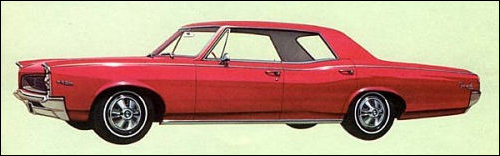
GM produced 4 door hardtops through model year 1976 (along with the 1965-67 Corvair, and the 1966-1972 intermediates Chevelle, Tempest/Lemans (alongside the 4 door post sedans). 


Ford/Mercury offered them 1956-1974- chickening out with the pillared hardtop upon the same generation body through 1978.


Chrysler introduced its initial 4 door hardtop in 1956, aka the Southampton.  


It's initial final generation body, coming after the 1968-97 "fuselage, with its 1974-1978 version.  Plymouth and Dodge, which offered them by 1957, would wimp out like Ford/Mercury by late 1974.  Chrysler, to its credit continued its 4 door hardtops through model year 1978, with its gorgeous waterfall front New Yorker (initially offered as the Imperial for 1974 & 1975.  Subsequently, Chrysler offered "pillared" hardtops (lacking fixed door window frames) only for 1979-1981, upon discontinuing their full sized cars, and offering as such the former compact Aspen/Volare chassis/body, with fixed door window frames.


https://en.wikipedia.org/wiki/Imperial_%28automobile%29


All U.S. American 4 door hardtops were full sized, except for the 2nd generation 1965-67 Corvair (shamefully not offered for 1968-69); 1966-1972 GM intermediates Chevrolet, Pontiac, Oldsmobile & Buick (all separate body on frame); as well as the (sadly unibody) 1970-1971 Ford Torino and Mercury Montego.


Chrysler/Dodge/Plymouth never produced any.


AMC had its 4 door hardtop, starting with the 1956 Nash 4 door hardtop .


AMC wimped out after 1960, yet did have an excellent design effort towards what should have been a 1970 Javelin-Hornet, 4 door hardtop mini station wagon- a more sensibly sized upscale alternative to the compact Hornet, as well as the Mustang/Camaro/Firebird,, a well as the Mercury Cougar.  However, its poor choice of unibody construction (no separate chassis frame) would undermine that idea.


https://www.hemmings.com/stories/2019/12/18/rogues-ramblers-rebels-and-more-fred-hudsons-tenure-at-american-motors


Now consider the respective time deltas- 1936 or 1967, with the current year as this authorship's, 2023.


Try imagining someone with say a 1936 Packard Phaeton, held within a family for several decades, choosing to "part" and scrap such a fine piece of history during the 1970s, 1980s or even later?


What is the great squeeze upon the mass personal ownership of automobiles?


Consider: local zoning ordinances, prohibiting people keeping their own automobile/cars, if either "unregistered" or inoperable within residential lots, unless kept fully indoors, if at all.


Consider Facebook's "value capture" with disallowing the forwarding of its Marketplace ads, which are artificially limited for local rather than international use.


Consider the vast market of the automobile owner internationally.  Just consider as a start, the pent up demand for better market access for people who come across potentially desirable, respectable personal cars.  Ask Russia.  Ask China.  Ask anywhere else.  Why are people in the U.S. continuously stripping and wasting perfectly rebuild-able desirable rear wheel drive U.S. American cars?  Why are we seeing people as here, now just recently written up in a mid summer article in Motor Trend:


Larry Dillon is one of those devoted Pontiac fanatics whose mission in life is to discover sad and neglected high-powered Pontiacs and return them to the streets where they belong. It's something that's been near and dear to his heart for the last four decades.


Larry's taste for Pontiac horsepower has put him in the seat of many top-tier muscle cars over the years. Countless GTOs, 2+2s, and Bonnevilles have made their way into his stable, and he's always on the lookout for more rare rides.


The above is the very start of the Motor Trend article, about a rare (5 made) 1968 Bagham OHC (Overhead Cam) Pontiac short-deck V-8, that Dillon acquired, and sought to flip at the July 2023 PYI Ames Pontiac Nationals event at the drag strip and fairgrounds in Norwalk, Ohio.


https://www.motortrend.com/features/ohc-pontiac-experimental-engine-found/


OK. "Larry Dillon is one of those devoted Pontiac fanatics whose mission in life is to discover sad and neglected high-powered Pontiacs and return them to the streets where they belong. It's something that's been near and dear to his heart for the last four decades... Larry's taste for Pontiac horsepower has put him in the seat of many top-tier muscle cars over the years. Countless GTOs, 2+2s, and Bonnevilles have made their way into his stable"


So what motivates/compels acquiring someone obtaining something akin to a 1967 Pontiac Bonneville 4 door hardtop, in reasonably tolerable straight body condition, and being so situated to striping such vintage cars for parts and scrap-page?  Just mere weeks after this article's appearance, the same individual, posts in Facebook PONTIAC PARTS SWAP MEET


 Parting out a 67 Bonneville four-door hardtop mint dash pad full AC setup let me know what part you're looking for Cars located in New Jersey if you could send me a PM and I will respond


 GOING TO THE JUNKYARD THIS WEEK SO LET ME KNOW IF YOU NEED ANYTHING! Parting 67 Bonneville four-door hardtop dash pad real decent, full AC setup let me know what part you're looking for Cars located in New Jersey if you could send me a PM and I will respond


Why would anyone make such a listing, right after being written up by Motor Trend, as a devoted Pontiac fanatic ... whose mission in life is to discover sad and neglected high-powered Pontiacs and return them to the streets where they belong....


OK, 1967 Pontiac Bonneville 4 door hardtop.  57,055 produced.  How many surviving?


This is the production body generation initially introduced for model year 1965.


This is a full sized automobile. 124" wheelbase.  Huge open window side


https://www.hemmings.com/classifieds/listing/1967-pontiac-bonneville-orlando-fl-2692667


Clearly we MUST address the net of "local" jurisdictional zoning restrictions, town, county and even state, that are overly prohibitive, most specially with upon larger lots zoned residential.


To be in such a business as Larry, one must have the space to store a number of automobiles on one's own dwelling.


One might suppose people would be permitted to store hobby cars, with restrictions contained somewhere within the rational scope, e.g. mandate things as tall fencing, and allowing outdoor storage kept minimally obtrusive, including with car covers upon the paved driveway towards the rear.


And one would likewise imagine the authorities easing the research and titling of such fine potential collector automotive works of art, as way too many are scrapped reportedly for the title being misplaced/lost, as when someone died and the kin did not have the paperwork kept inside the car. in question.


But alas, zoning restricts prohibit such hobby cars in a state of potential transitioning from being stored outdoors either covered or blocked from view by fencing limited to only 6 feet in height.


And people in general should better reflect upon such a speeding of wasteful and stupid collector car destruction.  Larry Dillon, as with anyone else, ought to be allowed to fence in a portion of his land, in order to store vintage automobiles for restoration and re-entry to the streets.


What is stymieing using the internet to find buyers world wide, and offering and selling of such collector automobile from buyers in Russia, China, the Middle East, and elsewhere?  Why does Facebook place arbitrary restrictions upon searches of its marketplace within comparably small areas of geography?  And on that note, what about Craigslist, with its absurd small area to large area index tree, e.g. Craigslist/small town/metro area/state, instead of Craigslist/everywhere/state-province/city/town?


Why instead are people eliminating such automobiles, for the sake of a few parts (many already otherwise findable), plus the scrap mettle value?


What are the full scope of U.S. mis-legislated and mis-regulated occurring under which here with policies designed for eliminating the widespread citizen ownership of automobiles, resulting in an obscene waste of mass produced products, via policies to speed the scrapping of perfectly serviceable automobiles already in existence.


Friday, August 11, 2023

How An Apparent Vendatta Against Higher Performance Engines Undermined Engine Development at PONTIAC

A sad tale of how GM stinginess may have cost in added pollution and fuel consumption, owing to some sort of apparent strange vendetta against Pontiac Motor Division's improved engine development


Pontiac had the supreme advantage by the later 1960s, with the debut of its rendering of GM's awesome 1968-1972 A body intermediates, specifically with its endura body colored front bumber available strictly upon its GTO.


The development of the overhead valve Pontiac V-8, initially debut for the 1955 model year, with its 4.62" bore spacings, had advanced to the point of its 389 cid V-8 which debut for the 1959 model year, received a larger bore for model year 1967, bringing its displacement with a 3.75" stroke to 400 cid.  Due to the higher emissions of the "closed" chamber cylinder heads, such as the 1967 "670" - Pontiac engineers introduced their "open" chamber cylinder heads for model year 1968, significantly reducing particle emissions.


In pursuit of greater performance, Pontiac engineers embarked upon two separate paths of cylinder head development- the round exhaust port Ram Air II, and the more radical Ram Air V- the latter with a revised exhaust port arrangement to no longer have the center two ports directly next to each other (good), though changing the firing order, therefore requiring altogether different camshaft sets.  But alas the RAV had tremendously oversized intake ports, rendering it largely impractical with inferior throttle response, and was thus never released as a factory installation.


The Ram Air II cylinder heads were a quite decent design, good enough to evolve as the Ram Air IV.  The Ram Air II came as a 400 cid, debuting spring 1968 in the intermediate sized GTO and the compact sized Firebird.  The Ram Air II would be super-ceeded by the Ram Air IV for model year 1969, again in the GTO and Firebird.  And for 1970, again in the GTO, as well as the new for 1970 1/2 Firebird Trans Am (and plausibly the Firebird Formula, though apparently non were ordered nor built- with the RAIV weirdly not appearing in the 1970 1/2 Firebird factory literature.

Alas, both the 1968 1/2 Ram Air II and the 1969-70 Ram Air IV were hobbled by a ridiculous mandatory rear differential ration of 3.90, and an even worse option of a ratio of 4.33- essentially tractor gears giving quite poor fuel economy and excessive engine revs at freeway speeds.  Why so?  Because the engineers selected a cam shaft with incredibly excessive valve timing duration of 308 and 320 degrees respectively intake and exhaust, great for higher revs, but terrible for slower revs.  So worse fuel efficiency with greater emissions.  And due to the excessive gearing, combined with GM's insane stinginess of refusing to provide Pontiac with FORGED rather than cast connecting rods, these engines were a warranty nightmare.  So for 1970, Pontiac sought to produce a Ram Air IV with better durability.  So the plan was to start producing the Ram Air IV with the improved more durable bottom end - forged rods, crankshaft and stronger engine block of the Ram Air V; of particular note being the RAV's improved design 400 cid engine block, so improved with its integral additional lifter valley, for securing the lifter lobes (the part that activates the pushrods which transmit the motion from the cam lobes to the valves).  By doing so, that is making the engine block's lifter lobes stronger, it becomes way more practical to develop somewhat steeper opening cam lobes, for greater engine efficiency (reduced emissions with greater power and fuel efficiency).

GM would of course block what we could call the "RAV 4" - that is, the improved bottom end of the Ram Air V, combined with the eminently more sensible Ram Air IV upper end.  GM would be too stingy to give Pontiac forged steel connecting rods and crankshafts, as such had to be devoted simply to its favored division Chevrolet.  But what about the stronger block?  Unlike the forged rods and crankshaft, the stronger block represented ZERO added cost, or what, perhaps 5 cent of extra cast iron per unit?  The development and tooling was already paid for.  So why not simply make the RAV engine block the standard issue?


Nope.  Instead, of utilizing the already paid for research and development of the RAV block, GM has Pontiac again redesigns its 400 cid block, changing from a one year only 979914 block for 1970 (which lacks the added lifter lobe valley cross ribbing), to a new block for model year 1971, the 481988 block (which also lacks the added cross ribbing).  It is a decent block, but why so develop yet another block that lacks the added cross ribbing, rather than use what was already researched and developed?

Nonetheless, intelligent minds within Pontiac prevail to establish such an improved stronger block with the development of the SD 455.  Due to the indisputably insane April 1970 dictate by upper level corporate GM management to lower engine compression ratios all the way down to about 8 to 1 (down from 9.5- 10.5 to 1), Pontiac shifted its development from the 400 cid engine to the 455 engine.  The reason given for this was to lower NOX emissions, nevermind that drastically increased CO and HC emissions, and resulting in automobiles getting 8 mpg instead of 13 mpg, while being able to use lower grade gasoline.  Hence we got such poorly tuned engines for 1971-72, such as what occurred with a road test by High Performance Cars during 1972, with a 455HO Firebird Trans Am, with a 4 speed manual and a 3.42 differential reportedly getting 5 to 8 mpg! 

The SD455 was essentially an improved version of the 455HO.  Representing a labor of love by Pontiac engine development, it was found to have considerably better fuel economy than the 455HO, at least according to a Spring 1973 SD455 Firebird Trans Am road test report by Car & Driver magazine, reportedly 13 mpg, as well as accounts of a model year 1973 preview caravan of Pontiac models, with the SD455 equipped automobile yielding that fleets 2nd best fuel economy.

People can read up more about the SD455 story in numerous places elsewhere.

The SD455 did have the integral cast additional lifter bore reinforcements.  Yet sadly the SD455 engine block was not only not adopted as the standard block, it was discontinued along with the SD455 engine by mid 1974.

Can we dare estimate the loss of potential engine efficiency, made possible with developing more efficient camshaft lobes, denied by corporate GM's failure to include the added lifter lobe strength?


How much extra automobile exhaust and extra fuel consumption did such a move so result?